
Quick Answer
Indoor succulent care works best when you keep things simple: give your plant bright light, use fast-draining soil, choose a pot with a drainage hole, and only water when the soil is fully dry. Most indoor succulent problems come from low light or too much moisture, not neglect.
Lost a succulent, a popular indoor house plant, and felt like you did everything right? You’re not alone. A lot of succulent care advice makes things sound fussy, when most problems come from a few basics being off.
In real life, these succulent varieties don’t need a strict routine. They need bright light, soil that dries fast, a pot that can drain, and watering at the right time. Get those right, and things get much easier.
Let’s keep this simple and practical, the way it works on an actual windowsill.
Set up your succulent so it can actually thrive
Many struggling succulents aren’t weak plants. They’re growing in a setup that keeps them too dark, too damp, or both. As indoor house plants, that’s where trouble usually starts.
Give it bright light before you worry about anything else
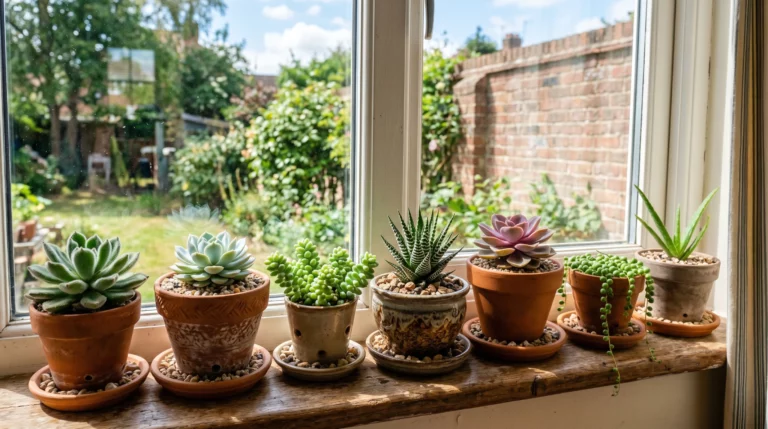
Start with light, because everything else depends on it. Most succulents need at least six hours of bright light to stay compact and healthy. South-facing windows are often best for bright direct sun. East-facing windows also work well, especially for bright indirect sunlight with gentler morning rays.
If your plant sits across the room from a window, that usually isn’t enough. To our eyes, the room may look bright. To a succulent, it can still feel dim.
Low light causes stretched growth, wider gaps between leaves, and pale color. The plant starts reaching, almost like it’s leaning out for a better look. Once that stretched growth happens, it won’t tighten back up.
If you’re not sure where to place yours, especially hardy succulents, this guide to best window spots for succulents can help you match the plant to the light you actually have.
Choose fast-draining soil and a pot with a drainage hole
Regular potting soil is often too heavy for succulents. It holds moisture for too long, especially indoors where air flow is lower and light may be weaker. That slow drying raises the risk of rot fast.
A well-draining soil like a cacti and succulent mix is the easiest place to start. Even better, choose one with grit like pumice, perlite, or coarse sand so water moves through quickly. In my experience, a rougher potting mix almost always works better than a soft, rich one.
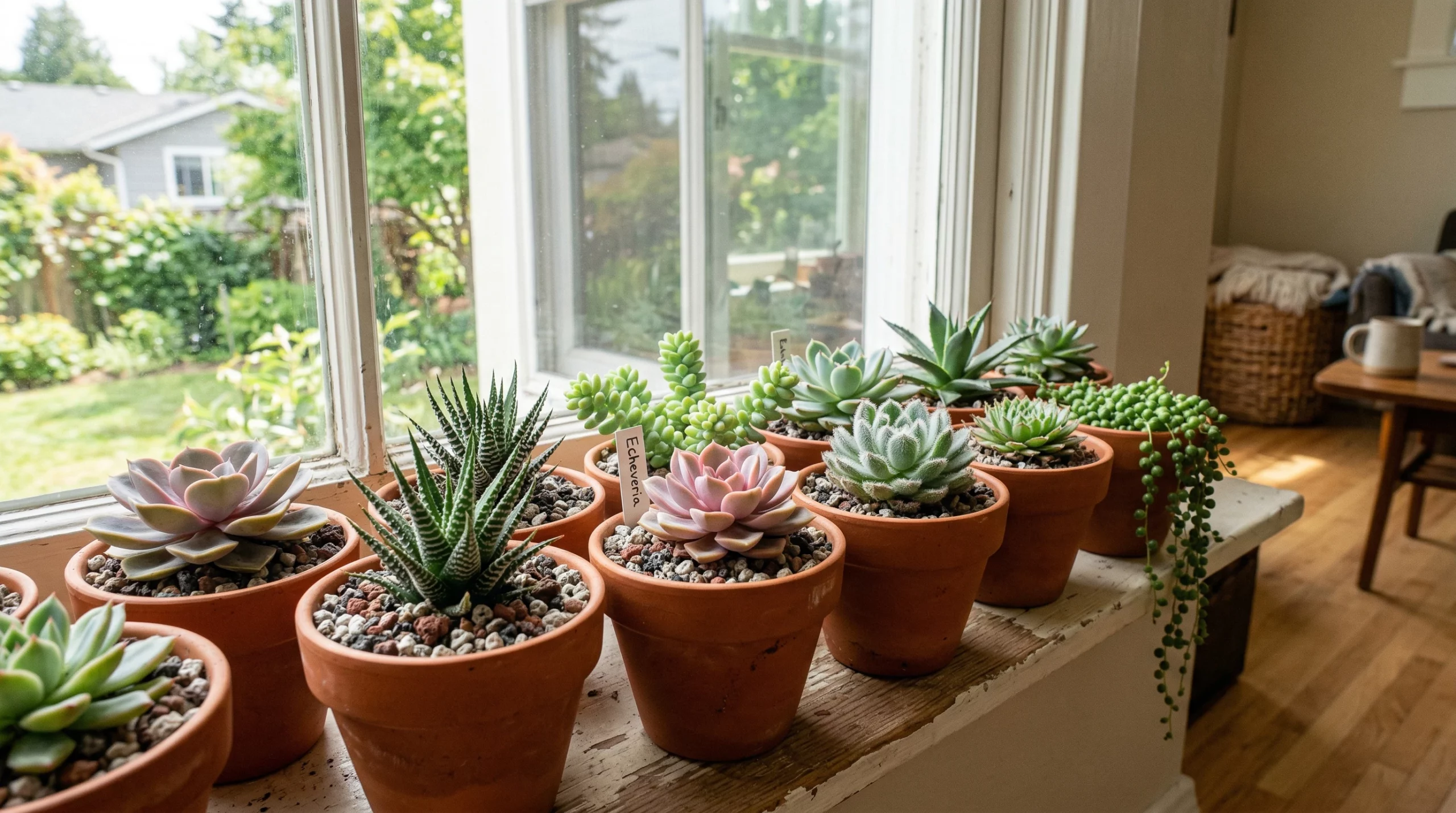
The pot matters too. Use one with drainage holes, every time. Terra cotta pots are a breathable option with drainage holes. Decorative glass containers without drainage holes look nice, but they trap water at the bottom. A drainage layer of rocks is not a substitute for drainage holes. That’s one of the most common reasons indoor succulents decline.
If you want a clearer picture of what works, this breakdown of fast-draining soil for succulents is worth reading.
Watering is where most succulent care goes wrong
Most beginners don’t kill succulents with neglect. They kill them with kindness.
That sounds harsh, but it’s true. Overwatering is still the biggest issue, and spring 2026 care advice keeps pointing to the same fix: check the soil first, then water deeply only when it’s dry.

Use the soak and dry method, not a fixed watering schedule
Forget the calendar. Succulents don’t care that it’s Sunday.
Instead, water thoroughly until excess runs out of the drainage hole. Then leave the plant alone until the soil is fully dry. Not slightly damp, not dry on top only, fully dry.
A bamboo skewer works well here. Push it down into the soil and pull it out. If it comes out cool or damp, wait. A moisture meter can help too, but your eyes and fingers still matter.
During active growth, an indoor succulent may need water every 10 to 14 days. During the dormant period, it may need far less, sometimes closer to every three to four weeks. Those are examples, not rules. Light, pot size, soil, and season all change the watering frequency.
When you’re unsure, waiting a little longer is usually safer than watering too soon.
Know the early signs of overwatering and underwatering
Overwatered succulents often look soft before they look dry. Leaves may turn mushy, yellow, or translucent. The base can feel weak. Roots may blacken with root rot, and the plant may drop leaves with barely a touch.
Underwatered plants look different. Their leaves wrinkle, thin out, and lose the plump foliage of a properly hydrated succulent. The soil will also be bone dry, not damp under the surface.
Here’s where people get tripped up. A plant with mushy lower leaves can still look limp, so they water again. That makes the problem worse, as overwatering promotes root rot.
Also, weak light and heavy soil can create a false watering problem. If the pot stays wet for days, even careful watering becomes too much. That’s why setup and watering always work together.
If root rot has started, act fast. Unpot the plant, cut away black or mushy roots, let healthy parts dry, then repot into dry gritty mix. Don’t water right away after repotting.
Keep your plants looking good with a few easy care habits
Once the basics are right, daily care becomes pretty light. You’re mostly watching, adjusting, and stepping in early when something looks off.
What to do when a succulent gets leggy, damaged, or pesty
Leggy growth almost always means low light. Move the plant closer to a brighter window, then rotate it every week or two so new growth stays more even.
If part of the plant turns mushy, trim back to healthy tissue with clean scissors. Let the cut dry before replanting. Also check the roots and soil; repotting into fresh soil often helps, because rot rarely starts for no reason.
Pests are usually manageable if you catch them early. Mealy bugs look like tiny bits of white cotton tucked into leaf joints. Wipe them with rubbing alcohol on a cotton swab, then improve air circulation and keep checking for stragglers.
A quick monthly scan helps a lot. Look for stretched growth, bugs, soft spots, or leaves dropping from the base. During the active growing season, a diluted liquid fertilizer once a month supports vigor. Repotting annually prevents overcrowding. Small problems stay small when you notice them early.

How to do propagation for healthy succulents without making it complicated
Propagation sounds fancy, but it doesn’t have to be. For most beginners, leaf cuttings and stem cuttings are the two primary ways to start new plants, with offsets being especially easy.
If you’re using a leaf, twist it off cleanly so the whole base comes away. Then let the end callus for one to two days. After that, set it on top of dry soil, not buried in it. Roots and baby growth usually show up faster in spring, when plants are already waking up.
Offsets are even easier. If a plant makes pups around the base, wait until they’re large enough to handle, then separate and pot them up.
Don’t rush water here. Fresh cuttings rot easily when kept too wet. Bright light, dry soil, and patience usually beat fussing.
Succulent care gets easier when you stop guessing
Most succulent problems come back to the same four things, bright light, dry soil before watering, gritty mix, and drainage holes. That’s the core. Everything else is fine-tuning.
If you’ve been following a rigid schedule and still losing plants, stop watching the calendar so closely. Watch the plant, the soil, and the light instead.
Do that, and indoor succulent care starts feeling a lot less confusing, and a lot more forgiving, whether you’re growing popular indoor house plants or various succulent varieties.
This post may contain affiliate links. If you make a purchase through these links, I may earn a small commission at no extra cost to you.