
Understanding Succulent Soil Types for Healthier Plants
A lot of succulent problems look like watering problems. Mushy leaves, dropped leaves, and slow decline often get blamed on the watering can. But many times, the real issue is soil.
Succulent roots want three simple things: air, quick drainage, and a mix that dries in a reasonable time. If the soil stays wet for days, the roots struggle. In this guide, we’ll walk through the main succulent soil types, how each one behaves, and how to choose the right mix for indoor and outdoor plants.
Best Soil for Succulents (Quick Answer)
Use fast-draining soil with grit like perlite or pumice.
Avoid regular potting soil unless you mix it with drainage material.
Soil should dry out quickly, not stay wet for days.
If it stays soggy, your plant is at risk of root rot.
What makes soil good for succulents
Good succulent soil does not act like rich garden soil. It should let water pass through fast, hold some structure around the roots, and leave plenty of tiny air pockets behind.
That matters because succulent roots are not built for long, soggy stretches. In most homes, regular potting soil stays wet too long, especially in plastic pots or low light.
The role of organic and gritty ingredients
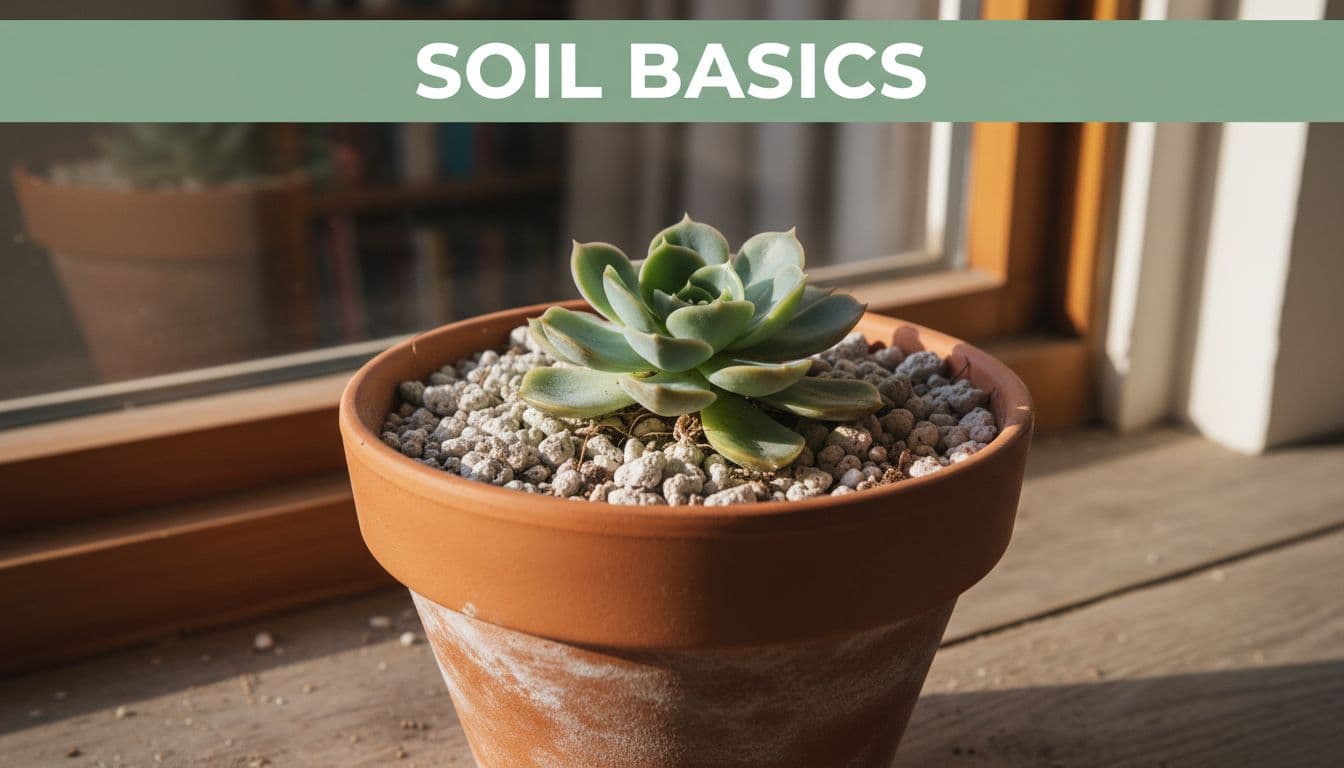
Succulent soil usually has two sides. The organic part includes things like potting soil, coco coir, or bark. These ingredients hold some moisture and give roots a place to settle.
The gritty part includes pumice, perlite, coarse sand, or small gravel. Those pieces create air spaces and help water move through the pot instead of sitting around the roots.
Most succulents do better when the mix leans more gritty than rich. That’s because a heavy, fluffy bagged soil can feel nice at first, but it often packs down and stays damp. A grittier mix feels a little rougher, yet roots usually like it much better.
Why fast-drying soil helps prevent root rot
Fast-drying soil solves a lot of common problems. It lowers the risk of root rot, makes fungus gnats less likely, and helps roots grow stronger instead of staying weak and stressed.
Fast-drying soil does not mean bone dry forever. It means the mix drains well and does not stay soggy for days.
That’s a big difference. Succulents still need water. They just need a soil type that dries at a healthy pace after watering. In my experience, this is where many beginners get tripped up. They water carefully, but the mix never gives the roots a chance to breathe.
Understanding the main succulent soil types you will see
When you shop for soil, the labels can make everything sound similar. In real life, these mixes behave very differently.
Regular potting soil and why it often causes trouble
Standard potting soil is made for plants that like steady moisture. Many houseplants love that. Most succulents do not.
Used straight from the bag, regular potting soil often holds too much water, especially indoors. It can stay damp in the middle even when the top looks dry. That’s why a plant may seem thirsty from the surface but still have wet roots below.
Beginners often lose succulents this way. The plant softens, leaves fall, and the roots begin to rot. Can regular potting soil work? Yes, but only after you cut it with lots of gritty material. Think of it as a base ingredient, not a finished succulent mix.
Cactus and succulent mix, the easy starting point
For most people, a bagged cactus and succulent mix is the simplest place to start. It usually drains better than regular potting soil and gives you a more forgiving setup from day one.
That said, not every bag is truly fast-draining. Some brands still contain a lot of peat or other moisture-holding material. In a dry climate, that may be fine. In a humid home or a dim room, it can still stay wet longer than you want.
If the mix looks fine and fluffy with very little grit, I’d add extra pumice or perlite. That small change often makes a big difference. It’s a good middle-ground choice because it works for many growers without much fuss.
Want a quick suggestion? Check this out on Amazon: DUSPRO Succulents Soil Potting Mix
Mineral-heavy mixes for growers who want maximum drainage
Mineral-heavy mixes are loaded with gritty materials and use much less organic matter. They often contain a high share of pumice, perlite, gravel, or coarse sand.
These mixes dry fast and give roots a lot of air. Because of that, they’re great for people who tend to overwater, grow indoors in humidity, or keep plants in containers that dry slowly.
The tradeoff is simple. They may need more frequent watering, and they are not always the best match for tiny cuttings that need a bit more even moisture while they root. Still, for mature succulents, a mineral-heavy mix can be a real stress-reducer.
How to choose the right succulent soil for your setup
There isn’t one perfect succulent soil for every home. Your light, climate, pot type, and watering habits all change what works best.
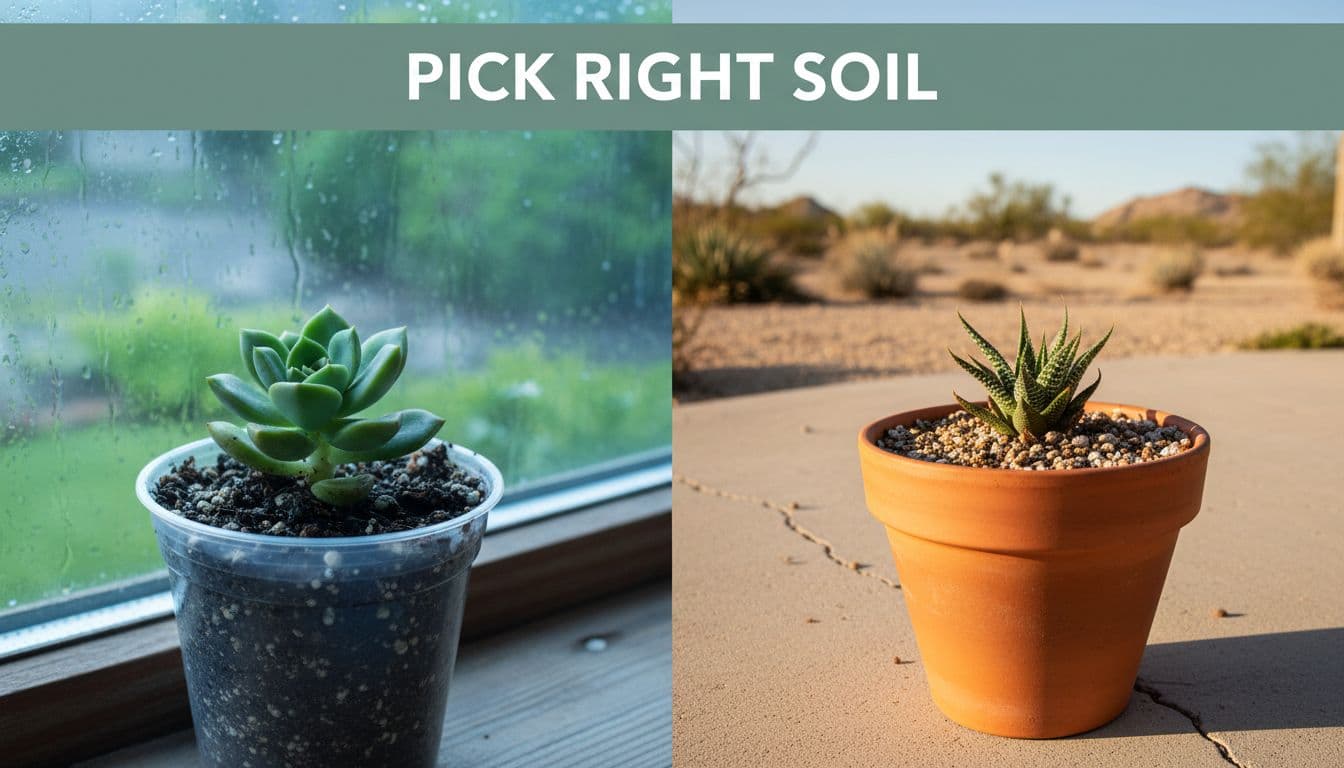
Match the soil to your light, climate, and pot
Low light, cool rooms, humid weather, and plastic or glazed pots all slow drying. In that setup, use a faster-draining mix with more grit. Otherwise, the soil may stay wet far longer than the plant can handle.
On the other hand, bright light, warm dry weather, and terracotta pots pull moisture out faster. Those conditions can handle a bit more organic matter in the mix.
Here’s a simple way to think about it: the slower your setup dries, the grittier your soil should be. The faster your setup dries, the more balanced your soil can be.
I also like matching soil to the grower. If you know you water a little too often, go grittier. If you forget to water for weeks and you grow outside in heat, a slightly less gritty mix may be easier to manage.
Simple signs your current soil is not working
Your plant will usually tell you when the mix is wrong. Watch for these clues:
- Soil stays wet for several days after watering
- Leaves turn mushy or translucent near the base
- A musty smell comes from the pot
- Water pools on top instead of soaking through quickly
If you notice any of those, don’t assume the plant is doomed. Often, changing the soil fixes the real problem faster than changing everything else.
Wrapping Up The Best Soil For Succulents
The best succulent soil is not one magic recipe. It’s a mix that drains fast, lets roots breathe, and fits your setup. Some homes need more grit, some pots dry faster, and some growers need a wider margin for error.
If your succulent keeps struggling, look at the soil before blaming yourself. Get that part right, and the rest of care gets much easier.
👉For more tips on How to Keep Succulents Alive
This post may contain affiliate links. If you make a purchase through these links, I may earn a small commission at no extra cost to you.
Frequently Asked Questions About Succulent Soil
What type of soil is best for succulents?
Succulents need fast-draining soil. A mix with perlite, pumice, or coarse sand works best because it prevents water from sitting around the roots.
Can I plant succulents in regular potting soil?
You can, but not by itself. Regular potting soil holds too much moisture. Mix it with gritty material like perlite to improve drainage.
Is cactus soil the same as succulent soil?
They are similar, but not always identical. Most cactus mixes work for succulents, though some benefit from adding extra drainage materials.
How do I make my own succulent soil mix?
A simple mix is 2 parts potting soil, 1 part perlite or pumice, and 1 part coarse sand. This creates a loose, fast-draining structure.
Why is drainage so important for succulents?
Succulents store water in their leaves. If the soil stays wet, roots can rot quickly. Good drainage keeps the roots healthy.
How often should succulent soil dry out?
The soil should fully dry between watering. Depending on conditions, this can take a few days to a couple of weeks.
Do succulents need special pots with drainage holes?
Yes. Drainage holes allow excess water to escape. Without them, even the best soil can stay too wet.
What happens if succulent soil stays wet too long?
Roots can suffocate and rot. You may notice soft leaves, discoloration, or a musty smell from the soil.
Can I use sand alone for succulents?
No. Sand alone compacts over time and can hold water. It should always be part of a mix, not the entire soil.
Do indoor and outdoor succulents need different soil?
Often, yes. Indoor plants usually need extra drainage because soil dries slower. Outdoor plants can handle slightly denser mixes due to sun and airflow.