
Can I Use Regular Soil for Succulents? Yes, but Only If You Fix It First
No, you shouldn’t use regular potting soil for succulents straight from the bag. It usually stays wet too long, and that’s one of the fastest ways to lose a healthy plant.
The good news is that you don’t need to toss it out. If you already have potting soil, you can turn it into something succulent-safe by adding enough gritty material. From there, two other things matter just as much, drainage holes and how you water.
Why regular potting soil usually kills succulents
Succulents are built for dry spells. They store water in their leaves, stems, or roots, so they don’t need soil that hangs onto moisture for days.
Regular indoor potting soil is made for the opposite job. It helps common houseplants stay evenly moist longer. That’s useful for ferns or pothos. It’s a problem for succulents.
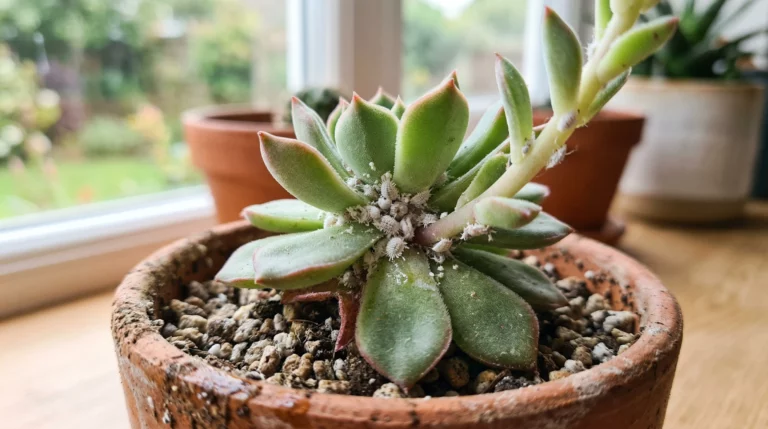
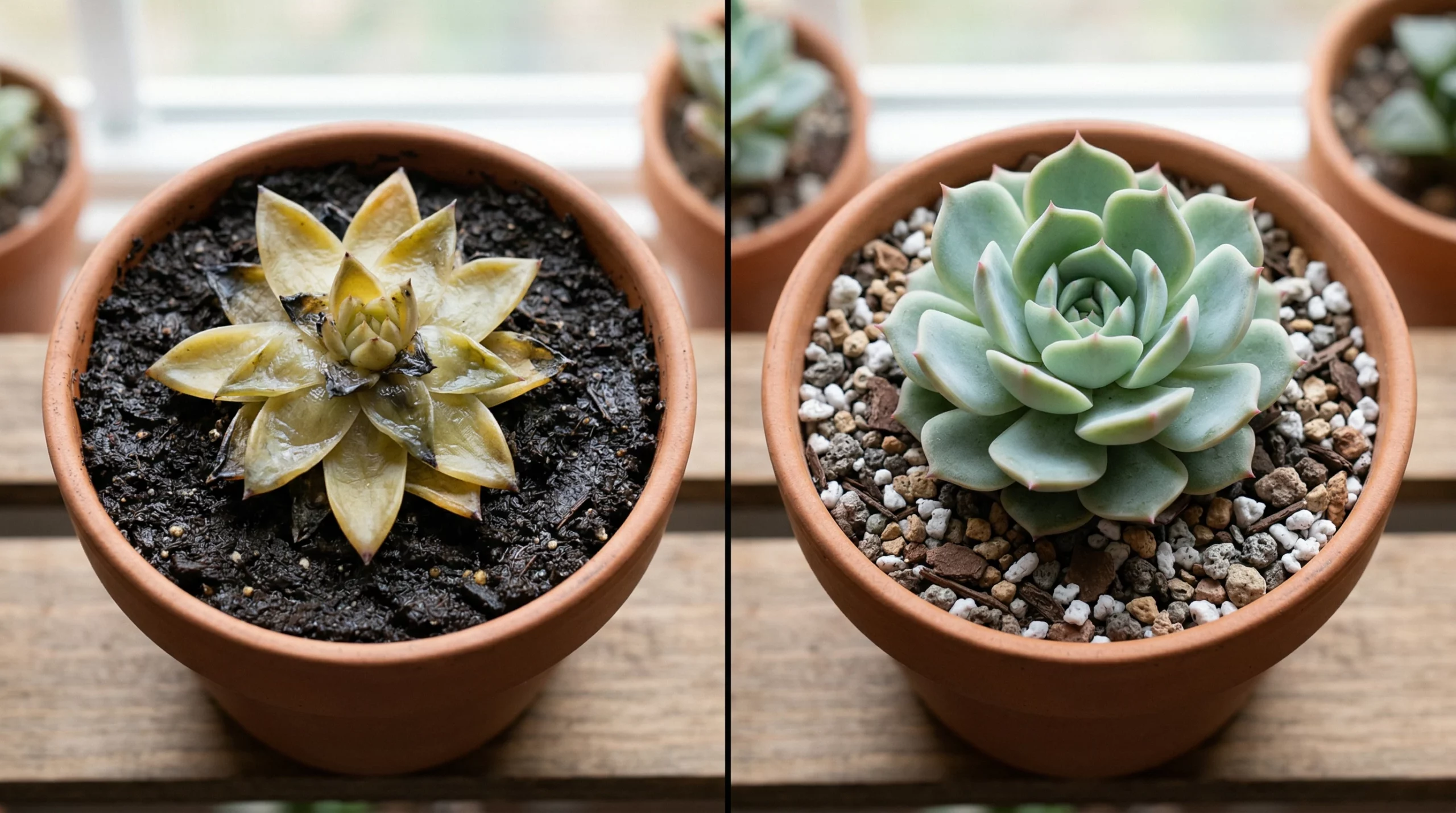
When succulent roots sit in wet soil too long, they struggle to breathe. Then the roots start to rot. After that, the plant often turns soft, mushy, or limp. Leaves may fall off with a light touch. If the problem keeps going, the whole plant declines from the bottom up.
A lot of bagged potting soil also contains dense organic ingredients like peat, compost, or fine bark. Those can compact over time, especially indoors where pots dry more slowly. Once that happens, water moves through the pot poorly and air spaces shrink.
That’s why many current gardening sources recommend a much grittier mix for succulents, often with at least half the mix made of mineral material indoors. If you want a deeper look at best succulent soil types, that guide helps show why fast drainage matters so much.
If the soil stays wet for days, your succulent is living in the wrong setup, even if the plant still looks okay today.
What root rot looks like before it is too late
Watch for early warning signs. They usually show up before the plant fully collapses.
You might see yellowing lower leaves, a soft stem base, or leaves that drop for no clear reason. Sometimes the roots turn black or smell bad. Another clue is simple but easy to miss, the soil still feels damp several days after watering.
If that sounds familiar, don’t wait. Succulents rarely bounce back while the roots stay wet.
How to make regular soil safe for succulents
If regular potting soil is what you have, you can still use it. You simply need to improve drainage first.
A simple DIY mix is 50% regular potting soil and 50% grit. That’s an easy starting point for most indoor succulents. It drains much faster than plain potting soil, and it gives the roots more air.
So what counts as grit? In plain terms, it’s the rough, mineral part of the mix that helps water run through instead of lingering. Good options include perlite, pumice, and coarse builder’s sand. You can use one of them, or combine them.
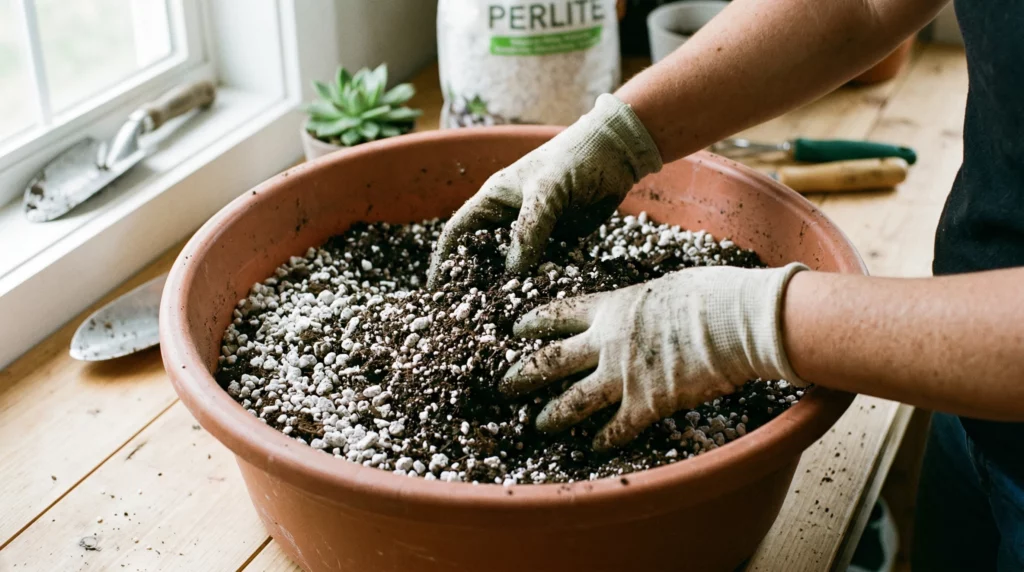
This matters even more indoors, because pots usually dry slower inside the house. Less wind, less heat, and lower light all stretch out the dry-down time. So while some growers use richer mixes outdoors, indoor succulents usually do better with more mineral content.
In my experience, a 1:1 mix is a practical sweet spot for beginners. It’s simple to remember. It’s also forgiving. If your home is humid, your pot is large, or your light is weak, you may want even more grit than that.
The gritty materials that work best
Perlite is the easiest one to find, and it’s usually the cheapest. It keeps mixes light and airy, though it can float upward after watering.
Pumice is excellent if you can get it. It lasts a long time, adds airflow, and doesn’t crush as easily. Many growers prefer it because it stays more stable in the pot.
Coarse builder’s sand can help too, because it adds drainage and weight. That extra weight is useful for top-heavy plants. Still, it needs to be coarse, not fine.
Skip vermiculite and other water-holding amendments. They do the opposite of what succulent roots need.
The one kind of sand you should never use
Never use fine sand like play sand or beach sand.
It sounds harmless, but it packs tightly once mixed with potting soil. Then airflow drops, drainage slows, and the whole mix can turn heavy and hard, almost like concrete. That’s the kind of mistake that looks small at first and causes trouble later.
The easier option, buy cactus soil and follow two non-negotiable rules
If you don’t want to mix your own soil, buy a cactus or succulent mix. That’s the easiest route, especially for beginners.
Still, not every bag is great right out of the package. Some cactus mixes still contain a lot of peat or fine organic material. If the mix looks soft, fluffy, or rich, add extra perlite or pumice before planting. A little adjustment can make a big difference.
Now for the part people often overlook: even perfect soil won’t save a succulent from trapped water or constant watering. Two rules matter every single time.
First, use a pot with a drainage hole. Second, water with the soak and dry method. Those two habits prevent more rot than any fancy soil brand ever will.
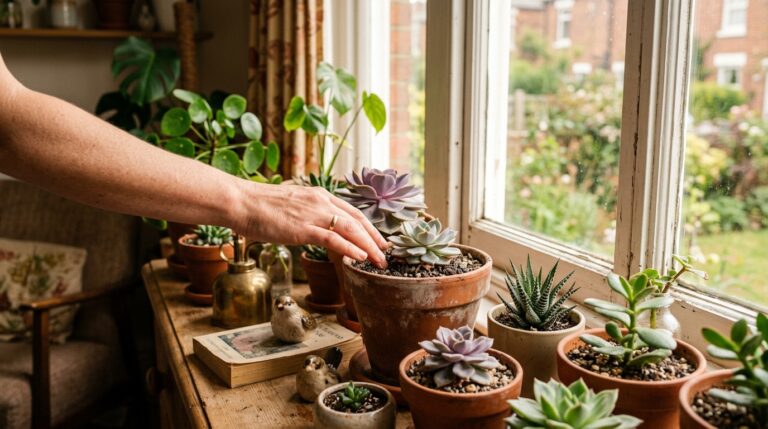
Also remember that dry-down time changes with your setup. In a bright, warm window, soil may dry quickly. In lower light, it can take 2 to 4 weeks or more. If you’re growing indoors, succulent indoor light needs affect watering more than most people realize.

Why a drainage hole matters more than people think
Without a drainage hole, extra water has nowhere to go. It settles at the bottom of the pot, right where roots stay wet the longest.
That hidden wet zone is where rot often starts. Terra cotta can help because it dries faster than many glazed or plastic pots. Still, the pot material is a bonus. The drainage hole is the must-have part.
Fix the Soil Before You Blame the Plant
Water deeply until excess runs out of the hole. Then stop.
After that, wait until the soil is fully dry before watering again. Don’t guess. Check with your finger, a wooden skewer, or by lifting the pot and feeling its weight.
A common mistake is giving tiny sips of water every few days. That keeps the top layer damp without soaking the whole root ball. The roots stay half-watered, and the plant never gets a clean wet-to-dry cycle.
Regular soil alone isn’t a good choice for succulents. But if you mix it with enough grit, it can work well.
Keep the formula simple, 50% potting soil and 50% grit. Then pair it with a drainage hole and true soak-and-dry watering. That’s the setup that gives beginners the best shot at healthy, firm, compact plants.
If your succulent has been struggling, start with the soil. Small changes there often fix a lot.
Frequently Asked Questions
Can you use regular soil for succulents?
Yes, but only if you fix it first. Regular potting soil usually holds too much moisture for succulents, so it needs added grit like perlite, pumice, or coarse builder’s sand to drain faster.
Why is regular potting soil bad for succulents?
Regular potting soil is made to stay moist longer. Succulents need the opposite. When the soil stays wet for days, the roots can rot and the plant may turn soft, mushy, or limp.
How do you make regular soil safe for succulents?
A simple starting mix is 50 percent regular potting soil and 50 percent grit. Good gritty materials include perlite, pumice, and coarse builder’s sand. This helps water move through faster and gives roots more air.
What kind of sand can you use for succulent soil?
Use coarse builder’s sand if you want to add sand to the mix. Avoid fine sand like play sand or beach sand because it packs tightly and slows drainage.
Do succulents need pots with drainage holes?
Yes. A drainage hole is one of the most important parts of the setup. Without it, extra water collects at the bottom of the pot, which keeps roots wet too long and raises the risk of rot.
What is the soak and dry method for succulents?
Water deeply until excess runs out of the drainage hole. Then wait until the soil is fully dry before watering again. This gives the roots a proper wet-to-dry cycle instead of constant moisture.
Is cactus soil always safe for succulents?
Not always. Some cactus mixes still contain too much peat or fine organic material. If the bagged mix looks soft or rich, add extra perlite or pumice before planting.
What are the early signs of root rot in succulents?
Early signs include yellow lower leaves, a soft stem base, leaves dropping too easily, black roots, a bad smell, or soil that stays damp for several days after watering.