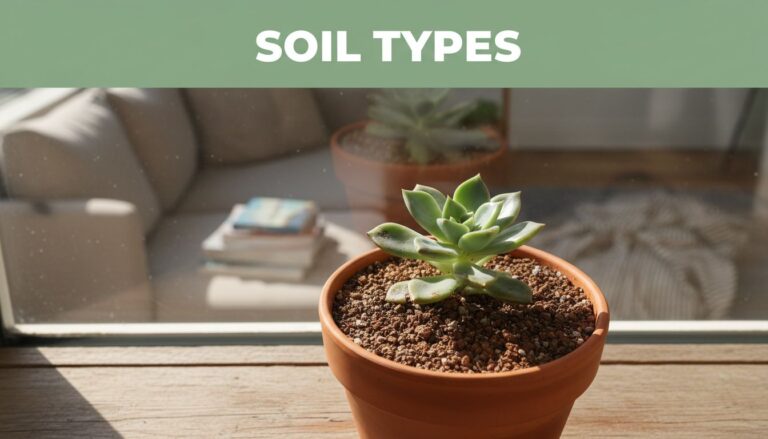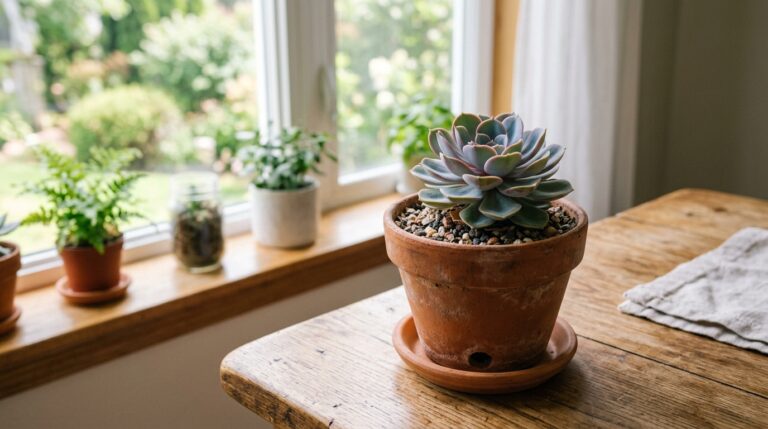

Mixed succulent planters look simple. Then one plant stretches, another rots, and the whole thing starts to look tired.
The good news is that planting succulents together works well when you stop thinking only about looks. What matters most is choosing plants with similar needs, using a pot that drains fast, and giving the roots room to breathe. If you want an arrangement that stays healthy, not just pretty for a week, start here.
Choose succulents that will actually live well together
A good arrangement starts with compatibility. Color comes later.
If two succulents want different light or watering, one usually loses. The thirsty one may rot if you water for the dry-loving one, or the sun lover may stretch if you place the whole pot in softer light. That’s why the best mixed planters use plants that behave in similar ways.
Match light, water, and growth habits before you think about color
First, group plants that all like bright light and dry soil. That gives you one care routine instead of three. It also makes watering much easier.
Leaf type helps here. In general, plump-leafed succulents hold water longer and need less frequent watering. Thinner-leafed or softer plants often dry faster. They can still work together, but only if their needs are close.
Growth speed matters too. Fast growers can crowd slow rosettes before you realize it. Then airflow drops, leaves stay damp longer, and the planter starts going downhill.
A simple way to keep things balanced is to group similar growers. Put rosette types together as the main body of the planter. Then use one trailing plant as an accent near the edge.
If you’re unsure about a mix, match for care first and style second. Healthy plants always look better.
Build a simple combo with a thriller, filler, and trailing plant
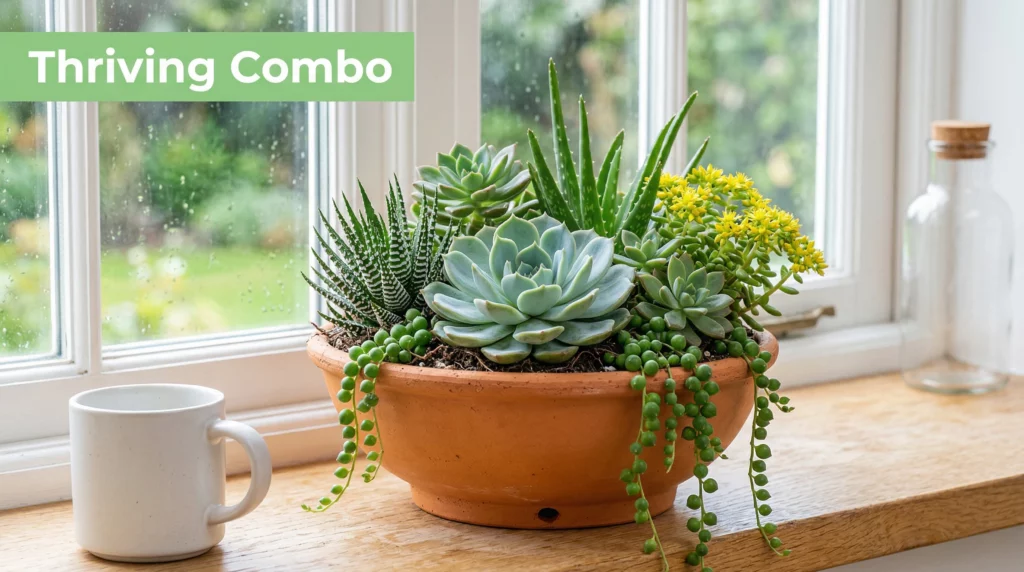
If design feels hard, use an easy formula. Pick one or two focal rosettes, add a few medium fillers, then place one trailing plant near the rim.
That mix gives you height, shape, and movement without making the pot messy. For example, you might use an Echeveria as the focal point, a couple of compact fillers around it, and a trailing Sedum or String of Pearls at the edge.
Keep the contrast visual, not cultural. In other words, vary color and shape, but keep care needs similar.
Set up the container so your succulents do not stay wet
Most mixed succulent planters fail from below, not above. The pot and soil decide how long roots stay wet.
That’s why beginners do better when they keep the setup simple and fast-draining.
Pick a pot with drainage and the right amount of room
A drainage hole matters. It gives excess water somewhere to go, which lowers the risk of rot fast.
Shallow pots usually work well for succulent groupings because many succulents have smaller root systems than people expect. A shallow bowl also helps the soil dry more evenly. On the other hand, a pot that’s too deep or too wide can hold wet soil longer than the plants need.
Try to leave some room between plants for growth, but don’t use a huge container to do it. Extra soil means extra moisture. For most arrangements, a snug fit is better than a giant pot.
Terra cotta is a solid choice because it dries quicker than glazed ceramic. Still, any pot can work if it drains well.
Use fast-draining succulent soil, never regular potting mix
Regular potting soil stays damp too long for most succulents. It’s made to hold moisture, which is the opposite of what these plants want.
Instead, use cactus or succulent mix. That’s the easiest option. If your mix still feels heavy, add extra pumice or perlite to make it grittier. A common approach is two parts potting mix to one part mineral material, especially for indoor planters.
The goal is simple. Water should move through the pot, and the soil should dry out in a reasonable time.
Also, keep the plant crowns above the soil line. If leaves sit buried or pressed into damp mix, rot often starts there first.
How to plant succulents together step by step
Now for the part most people want help with. The process is quick once the plants and container make sense together.
Plan the layout before you plant anything
Before you remove a single plant from its nursery pot, set everything on top of the soil. Then turn the container and look at it from all sides.
Place taller plants near the center if the planter will be viewed all around. If it will sit against a wall, put taller plants toward the back. Next, tuck medium plants around them. Finally, set trailing plants near the edge where they can spill naturally.
Leave a little breathing room. You want the planter to look full, not jammed tight. About half an inch to an inch between plants is often enough for airflow and future growth.
Plant each succulent at the right height and fill in around the roots
Take each plant out gently. If the roots are tightly packed, loosen them a bit with your fingers. You don’t need to rip them apart. Just free them enough so they can settle into the new soil.
Set each succulent so the crown sits slightly above the soil line. Then fill in around the roots and firm the mix lightly. Don’t pack it hard. The roots need contact with the soil, but the mix should still stay airy.
Most important, don’t bury lower leaves. That’s one of the most common beginner mistakes, and it often leads to mushy leaf bases.
You can add a thin top dressing of gravel if you like the look. It also helps keep leaves off damp soil. Still, it’s optional.
Wait to water if needed, then move the planter into bright light
If you broke leaves or disturbed roots a lot, wait a short time before watering. A day or two is often enough. That pause helps damaged spots dry and lowers rot risk.
If the roots stayed mostly intact and the soil is bone dry, you can water after planting. Soak the soil, then let it dry fully before watering again.
After that, move the arrangement into bright light. Indoors, that usually means a sunny window or the brightest spot you have. If the plants aren’t used to strong direct sun, introduce it slowly so the leaves don’t scorch.
Keep the arrangement healthy after planting
Once the planter is done, care gets easier. You mainly need good light, careful watering, and an eye on crowding.
Water by dryness, not by the calendar
Succulents don’t want sips on a schedule. They want a full drink, then a dry spell.
Soak the soil well, let extra water drain out, and wait until the mix is dry all the way through before watering again. How long that takes depends on the pot size, light, airflow, and season. A shallow terra cotta bowl may dry much faster than a deep glazed container.
That’s why calendar watering causes so many problems. Two planters can sit side by side and still dry at different speeds.
Watch for the mistakes that ruin mixed succulent planters
The big troublemakers are predictable. No drainage, poor light, overwatering, and mixing plants with different needs cause most failures.
Crowding is another one. Over time, one plant may take over while another gets shaded out. When that happens, don’t force the arrangement to stay the same. Edit it. Remove the overgrown plant, re-space the rest, or replant the crowded ones into a new pot.
That’s normal, not a failure. Mixed planters change as they grow.
A healthy succulent arrangement isn’t about packing random favorites into one pot. It works because the plants want the same basic care, and the setup lets water move through fast.
Keep your first planter simple. Choose compatible plants, use gritty soil, and give the arrangement bright light. Then watch how it grows and adjust as needed. That’s how you turn a pretty planter into a lasting one.
This post may contain affiliate links. If you make a purchase through these links, I may earn a small commission at no extra cost to you.