
Succulent Joy

You’ll hear this a lot: succulents love sunlight, so just put them in the brightest window you have.
Sounds simple… until you actually try it.
A few days go by, and something feels off. The plant doesn’t look quite right. Maybe the leaves start fading, stretching, or showing signs of stress. Not dead, but definitely not thriving either.
That’s where the confusion around succulents and direct sunlight indoors really starts.
Most succulents do need strong light, but direct sunlight inside your home doesn’t always behave the way people expect. The angle, intensity, and even the type of window can change how that light affects your plant.
If you’re trying to figure out succulents direct sunlight indoors, start with this: most need very bright light, but not all of them need harsh, direct sun all day. Some do best with a few hours of gentle sun. Others stay healthy in strong indirect light, as long as it’s bright enough.
The goal is simple. You want compact growth, healthy color, and soil that dries at a normal pace. Once you know what to look for, choosing the right spot gets a lot easier.
Most succulents do not need direct sunlight indoors, but they do need very bright light. A few hours of gentle sun from an east or south-facing window works well for many types. Others grow fine in strong indirect light. The goal is simple: keep the plant compact, healthy, and drying out at a normal pace.
Most succulents need bright light, not always harsh direct sun
The short answer is no, succulents do not always need direct sunlight indoors. However, they almost always need more light than people expect. That’s why they struggle on side tables, dark shelves, and across-the-room “bright” spots.
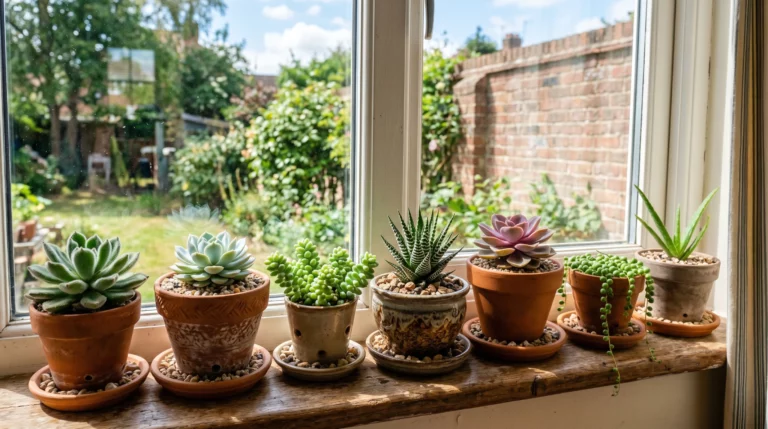
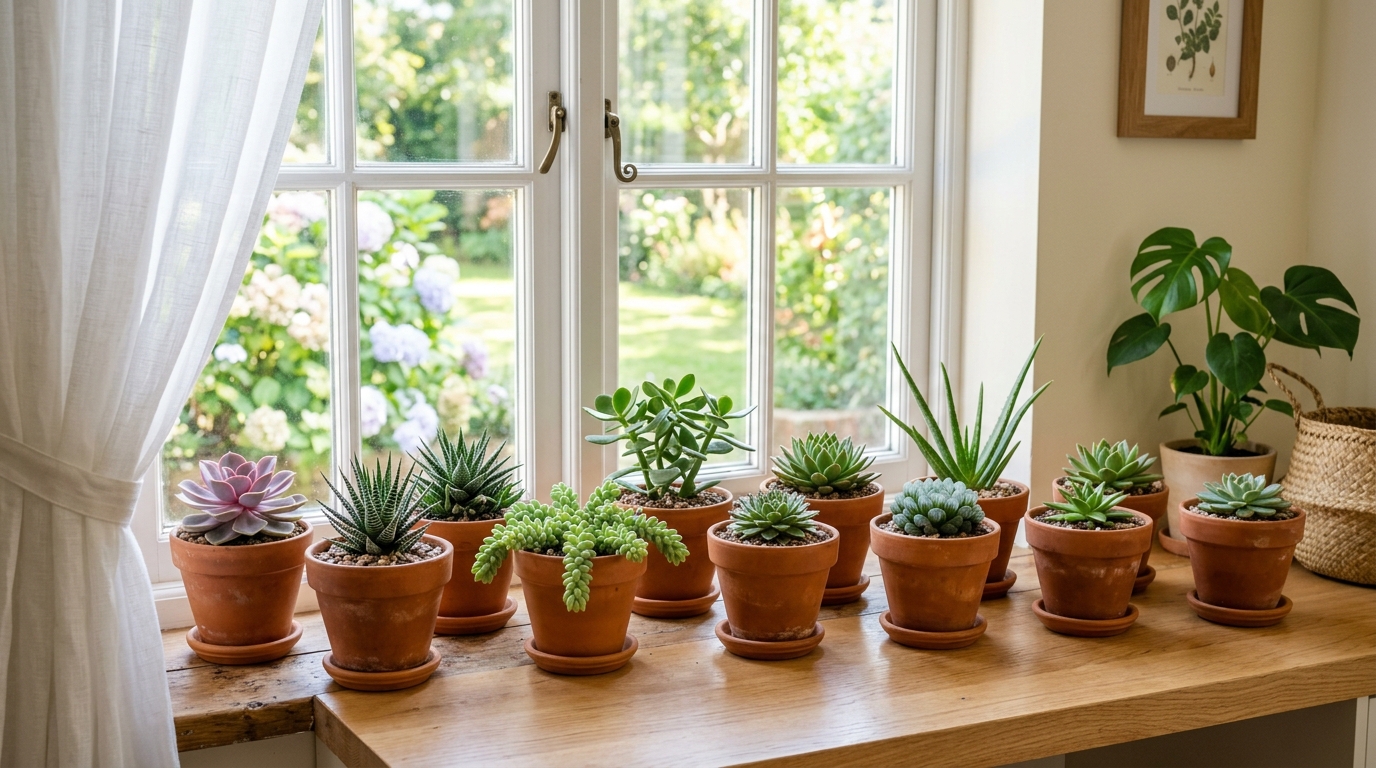
In my experience, sun-loving types like echeveria, jade, sedum, and many cacti usually want the brightest window you have. A few hours of direct morning sun often works well. On the other hand, haworthia, gasteria, and some aloe types can handle bright indirect light much better.
That difference matters. A lot.
Glass also changes how sunlight behaves. Morning sun from an east-facing window is usually gentle. Afternoon sun from a west-facing window can be much stronger, especially in summer. So a succulent that loves sun outdoors can still scorch indoors if you move it too fast.
That’s why I like to think in terms of balance, not rules. This helpful guide on light balance tips for succulents makes the same point. More sun is not always better. The right amount depends on the plant, the window, and what the plant was used to before.
Indoors, the best light is usually the strongest light your plant can handle comfortably.
Also, remember that light and watering work together. In low light, soil stays wet longer. As a result, a watering routine that worked near a sunny window can cause trouble in a dim room. That’s often where rot starts.
Where to place succulents indoors for the best light
For most homes, the best spot is much closer to the window than you think. Light drops off fast as you move away from the glass. A spot that feels bright to our eyes can still be too dim for a succulent.
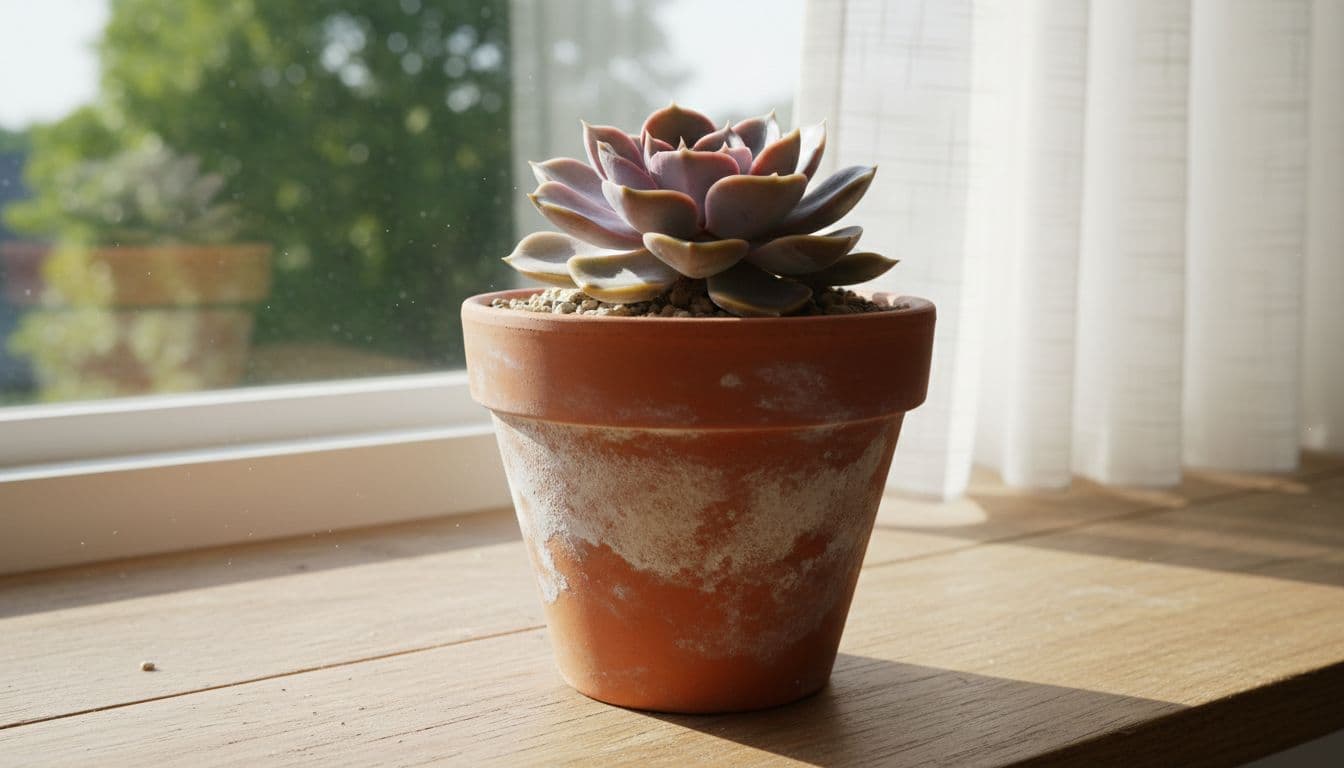
Here’s a quick way to judge window light indoors:
| Window direction | What it usually gives | Best for |
|---|---|---|
| East | Gentle morning sun | Most succulents |
| South | Long, bright exposure | Sun-lovers |
| West | Strong afternoon sun | Acclimated plants |
| North | Softest light | Only low-light-tolerant types, or use a grow light |
For beginners, an east window is often the easiest place to start. It gives direct sun, but it’s usually less intense. South windows are great too, although summer heat can be a bit much for tender leaves. West windows can work, but I’d be careful with plants that were growing in lower light before.
A north window is usually the weak link. Some plants will survive there, but many will stretch over time. If north is all you’ve got, a grow light often makes the difference between “alive” and actually healthy. For broader indoor succulent care basics, that’s a good place to start.
A few placement mistakes show up again and again:
- Too far from the glass: Even two or three feet back can be a big drop in light.
- Sudden moves into hot sun: Leaves can burn fast.
- Weak window plus heavy watering: This is one of the most common indoor problems.
Also, don’t ignore the season. A spot that works in winter may be too hot in July, while a summer setup may be too dim in December.
Signs your succulent needs more or less sun
Your plant will usually tell you when the light is off. The trick is knowing what it’s saying.
If a succulent needs more light, it often starts stretching. Leaves space out. The stem grows longer. The whole plant leans toward the window. New growth may look smaller or paler too. This is called etiolation, but the plain-English version is simple: the plant is reaching.
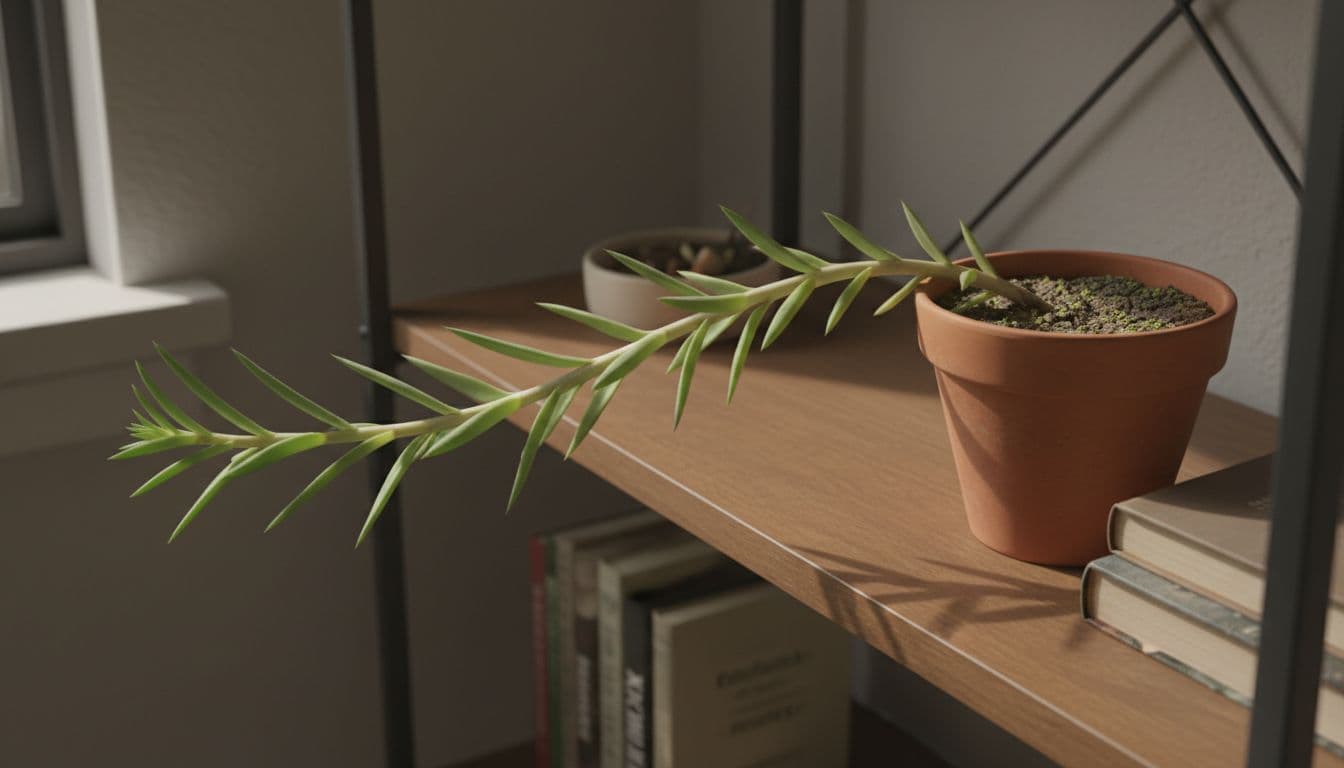
Once a succulent stretches, that old growth won’t shrink back. Still, better light will improve the new growth going forward. So if you catch it early, you can stop the problem from getting worse.
Too much sun looks different. You may see bleached patches, brown crispy spots, or leaves that look faded on the side facing the window. Sometimes leaves turn red or purple. That color shift is not always bad, because some succulents naturally “stress color” in strong light. But if the change comes on fast and the leaves look damaged, back the plant off a bit.
A lot of people miss one big clue: watering trouble can really be a light problem. In a dim room, the pot stays damp longer. Then roots sit in wet soil, and the plant starts looking tired or mushy. That’s one reason why direct sun isn’t always required, but strong light still matters so much indoors.
If you’re unsure, change one thing at a time. Move the plant to brighter light first. Then watch the new growth over the next few weeks. When the setup is right, new leaves come in tighter, firmer, and more upright.
Frequently Asked Questions
Quick answers for common questions about succulents and indoor sunlight. :contentReference[oaicite:0]{index=0}
Do succulents need direct sunlight indoors?
Not always. Most succulents need very bright light indoors, but not every type needs hard direct sun all day. Some do well with a few hours of sun through a window, while others stay healthy in strong indirect light. :contentReference[oaicite:1]{index=1}
What kind of indoor light is best for succulents?
The best light is usually the strongest light your plant can handle comfortably. For many succulents, that means bright light close to a window, often with gentle morning sun. :contentReference[oaicite:2]{index=2}
Which window is best for indoor succulents?
An east-facing window is often the easiest starting point because it gives gentle morning sun. South-facing windows also work well for sun-loving types. West-facing windows can work too, but the afternoon light is stronger. :contentReference[oaicite:3]{index=3}
Can succulents grow in a north-facing window?
Some lower-light-tolerant types may survive in a north-facing window, but many succulents will stretch over time. A grow light often helps if north light is all you have. :contentReference[oaicite:4]{index=4}
How close should a succulent be to a window?
Usually much closer than people think. Light drops off fast as you move away from the glass, so even a bright-looking spot across the room can still be too dim for many succulents. :contentReference[oaicite:5]{index=5}
Which succulents need the brightest indoor light?
Sun-loving types such as echeveria, jade, sedum, and many cacti usually want the brightest window available. These types often do best with a few hours of direct sun. :contentReference[oaicite:6]{index=6}
Which succulents tolerate bright indirect light better?
Haworthia, gasteria, and some aloe types usually handle bright indirect light better than hard direct sun. :contentReference[oaicite:7]{index=7}
How can I tell if my succulent needs more light?
A succulent that needs more light often stretches, leans toward the window, and grows with wider spaces between leaves. New growth may also look smaller or paler. :contentReference[oaicite:8]{index=8}
What does too much indoor sun look like on a succulent?
Too much sun can show up as bleached patches, faded leaves, or brown crispy spots on the side facing the window. A fast color change with damage is a sign to back the plant away a bit. :contentReference[oaicite:9]{index=9}
Does indoor light affect how often I should water a succulent?
Yes. In lower light, soil stays wet longer. That can turn a normal watering routine into an overwatering problem and increase the risk of rot. :contentReference[oaicite:10]{index=10}
Should I move my succulent straight into stronger sun?
No. A sudden move into hot direct sun can burn the leaves quickly. It is better to adjust the plant gradually and watch how it responds. :contentReference[oaicite:11]{index=11}
Do seasonal changes affect succulent light indoors?
Yes. A setup that works in winter may be too hot in summer, and a summer setup may become too dim in winter. Indoor succulent placement often needs small seasonal adjustments. :contentReference[oaicite:12]{index=12}
For more tips, read my Beginners Guide That Actually Works
Bottom line
So, do succulents need direct sunlight indoors? Some do, some don’t, but almost all need brighter light than the average houseplant. Put them close to a good window, favor gentle direct sun when possible, and watch how the plant responds. If it stretches, go brighter. If it scorches, ease back. The plant itself is your best guide.
This post may contain affiliate links. If you make a purchase through these links, I may earn a small commission at no extra cost to you.