
How to Keep Succulents Alive for Beginners Without Overdoing It
Most succulents don’t die from neglect. They die from too much care. Succulents are beginner-friendly, but they often fail for one simple reason: people treat them like thirsty houseplants. That’s the trap. These plants store water in their thick leaves, so overcare is often the real problem.
If your succulent has mushy leaves, black spots, a stretched shape, or dry, shriveled growth at the top, you’re not alone. Most problems come back to the same basics: light, watering, soil, drainage, and a few seasonal changes. Get those right, and these plants become much easier to live with.
How to Keep Succulents Alive
- ☀️ Bright light (4–6 hours daily)
- 🌱 Fast-draining soil
- 🪴 Pot with drainage
- 💧 Water only when fully dry
Start with the right setup so your succulent has a fair chance
Before you think about routines, start with a plant and a pot that won’t fight you. Some succulents are simply easier indoors. Aloe, snake plant, burro’s tail, and hens and chicks usually handle beginner mistakes better than fussier types.
Your container matters just as much as the plant. Succulents like a snug home, not a giant pot full of wet soil. When the pot is too large, the mix stays damp longer, and that raises the risk of rot.
Choose a pot with drainage, not just a pretty container
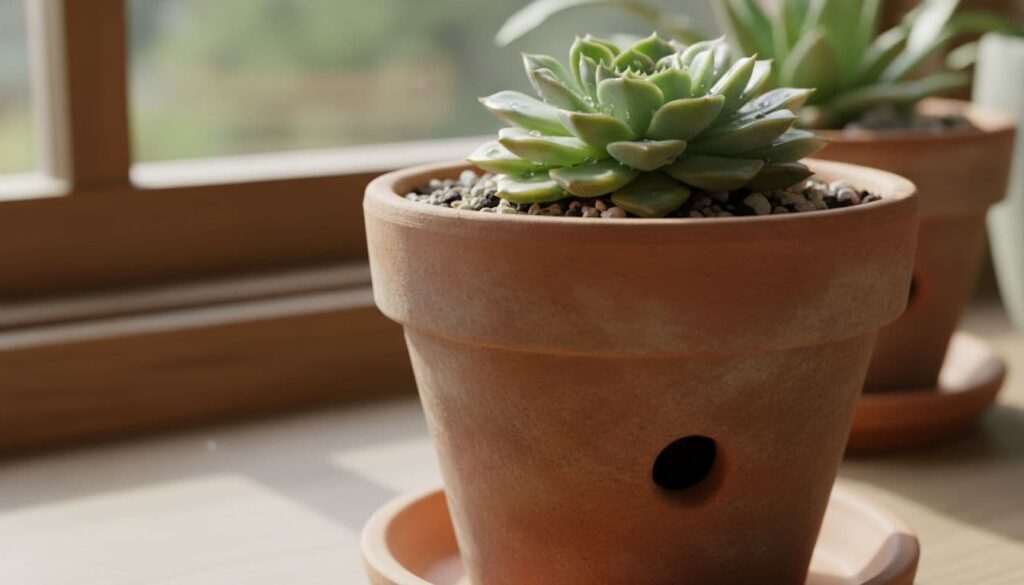
A drainage hole gives extra water somewhere to go. That sounds basic, because it is. Still, it’s one of the biggest reasons beginners lose succulents.
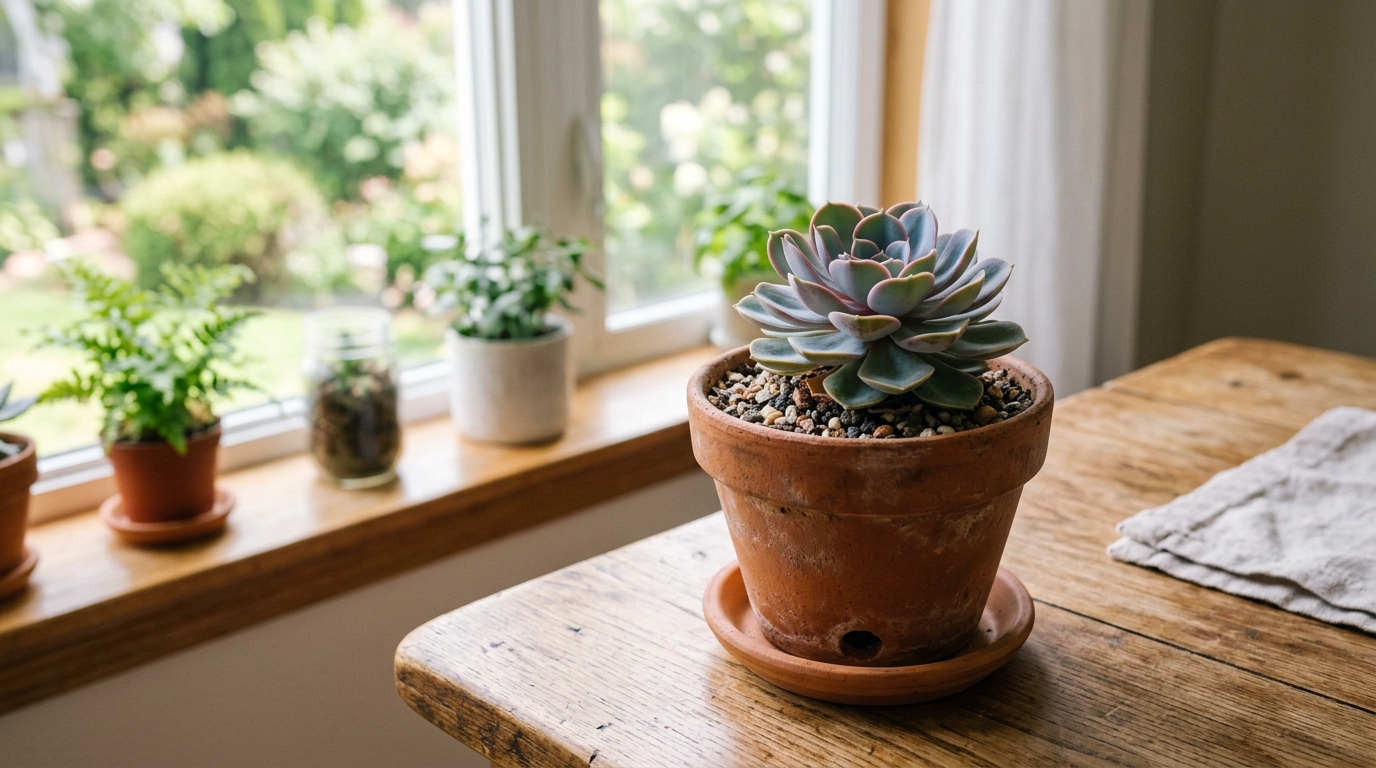
Terra cotta and ceramic pots work well, especially if they have a drainage hole at the bottom. Terra cotta is especially helpful because it dries faster than plastic. On the other hand, closed glass jars and solid-bottom containers hold moisture too long, which can lead to root rot and pests.
If you love a decorative outer pot, that’s fine. Just keep the plant in a nursery pot inside it, then lift it out when you water.
Use fast-draining soil that dries out quickly
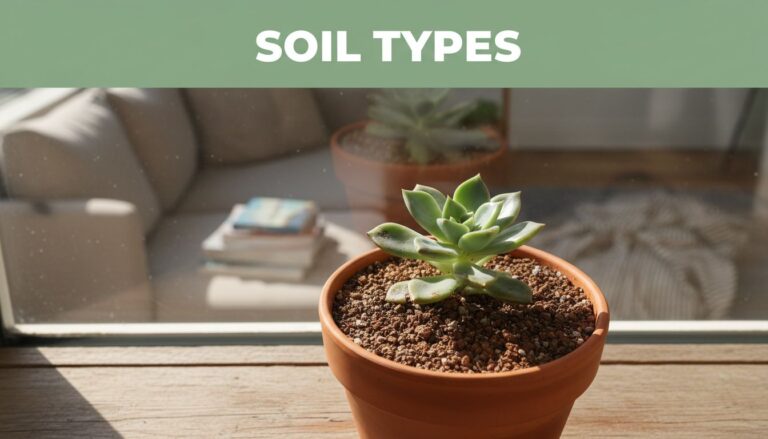
Succulents don’t want dense, soggy soil. They want a mix that dries out fast and lets air move around the roots. A cactus or succulent mix is the easiest choice for beginners.
If you only have regular potting soil, lighten it with coarse sand or grit. Some growers also add gravel or other chunky material, which can help with airflow. The goal is simple: the soil should not stay wet for long. Check out my guide: Best Soil for Succulents
Give your succulent the light it needs without frying it
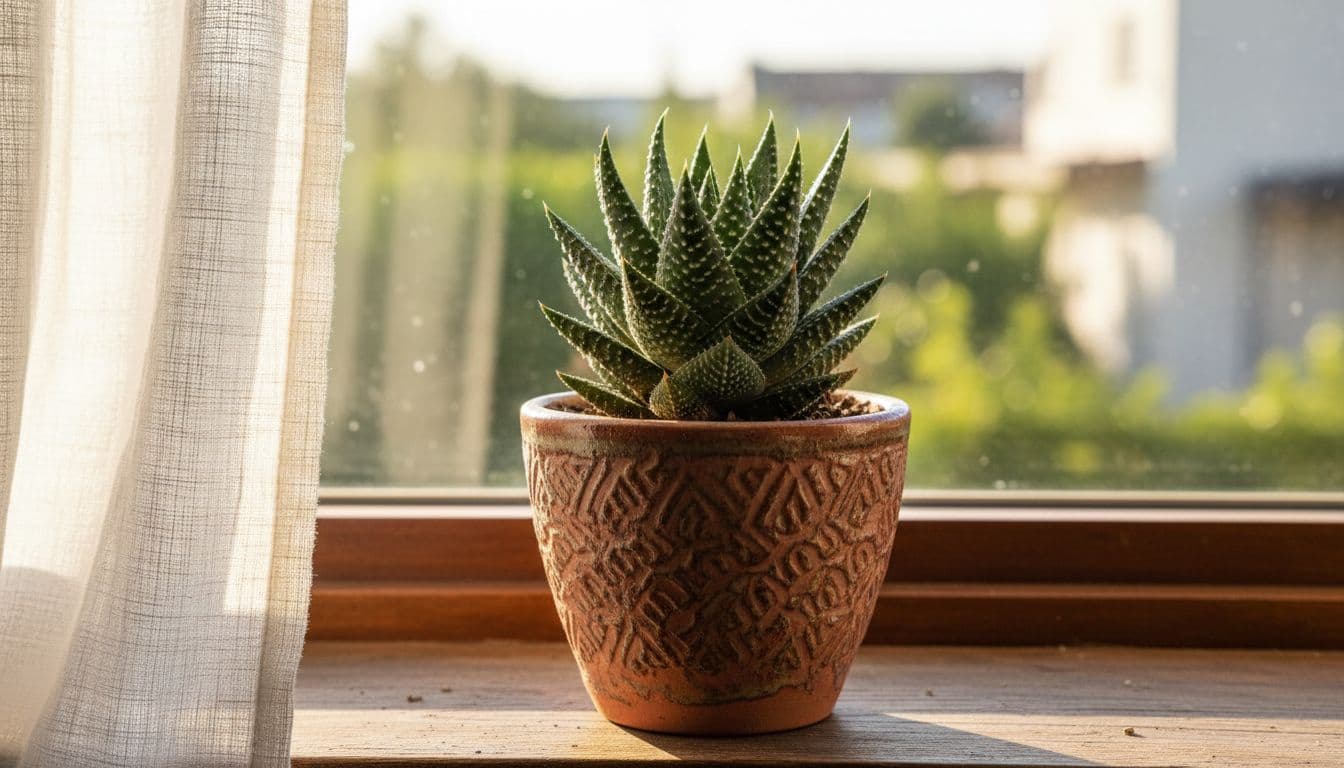
Most succulents want bright light, and many do best with about 4 to 6 hours of sun each day. A sunny window often works well, especially one with strong morning or afternoon light.
That said, more sun isn’t always better. Indoor succulents can burn if you move them from shade straight into harsh all-day sun. So, give them time to adjust.
How to tell if your succulent needs more light
Low light changes the shape of a succulent before anything else. You may notice it stretching taller, leaning hard toward the window, or showing bigger gaps between leaves. Growth can also look weak, pale, or loose instead of compact.
If that sounds familiar, move it closer to a brighter spot. Also, rotate the pot now and then so the plant grows more evenly.a
Read my post: Do Succulents Need Direct Sunlight Indoors?
How to spot too much sun before real damage sets in
Too much sun usually shows up as stress marks. Look for beige or brown patches, faded color, or dry sections that weren’t there before. In worse cases, leaves can turn dark, crisp up, and fall off.
Move the plant into brighter light gradually, not all at once. Think of it like skin after winter. Sudden full sun can be a lot.
Dig deeper with this article: Do Succulents need sun?
Water less often, but water the right way
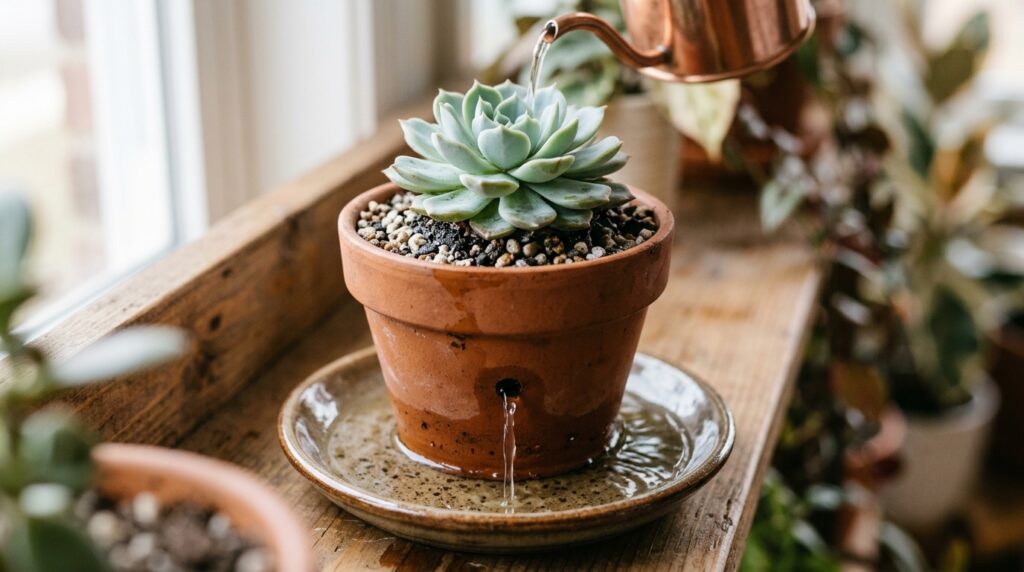
Here’s the core rule: water only when the soil is fully dry, then water thoroughly and let the extra drain away. This is often called the soak-and-dry method, and it works because succulents need a real drink followed by a dry period.
Overwatering kills more succulents than underwatering. By a mile. If you remember one thing from this guide, make it that.
How often should you water a succulent indoors
There isn’t one perfect schedule, because your light, heat, pot size, and season all change the timing. In warmer months, many indoor succulents need water about every 1 to 2 weeks. In winter, that can stretch to every 4 to 6 weeks.
Check the soil before you water. The top half should be dry, and often the full depth should be dry too. Firm, plump leaves usually mean the plant is doing fine. Soft, bendy leaves can mean it’s thirsty.
If the soil still feels cool or damp, wait. A succulent would rather be dry for a bit than wet for too long.
The safest way to water without causing root rot
Water the soil, not the leaves. If your plant sits inside a decorative pot, take out the nursery pot first. Then soak the soil well, let the extra water run out completely, and put it back only after it finishes dripping.
Later, empty any water collected in the outer pot or saucer. Roots sitting in water are one of the fastest paths to rot.
Misting sounds gentle, but it’s usually not the best choice for potted succulents. It often wets the surface without reaching the root ball, and that can lead to shallow roots.
Watch for early trouble signs and fix problems fast
Good news, succulents usually give warnings before they collapse. The trick is knowing which signs matter and which ones are normal.
For example, a few lower leaves drying up and falling off can be part of normal growth. New trouble usually shows up higher on the plant, or it changes the texture and color fast.
What overwatering looks like, and what to do next
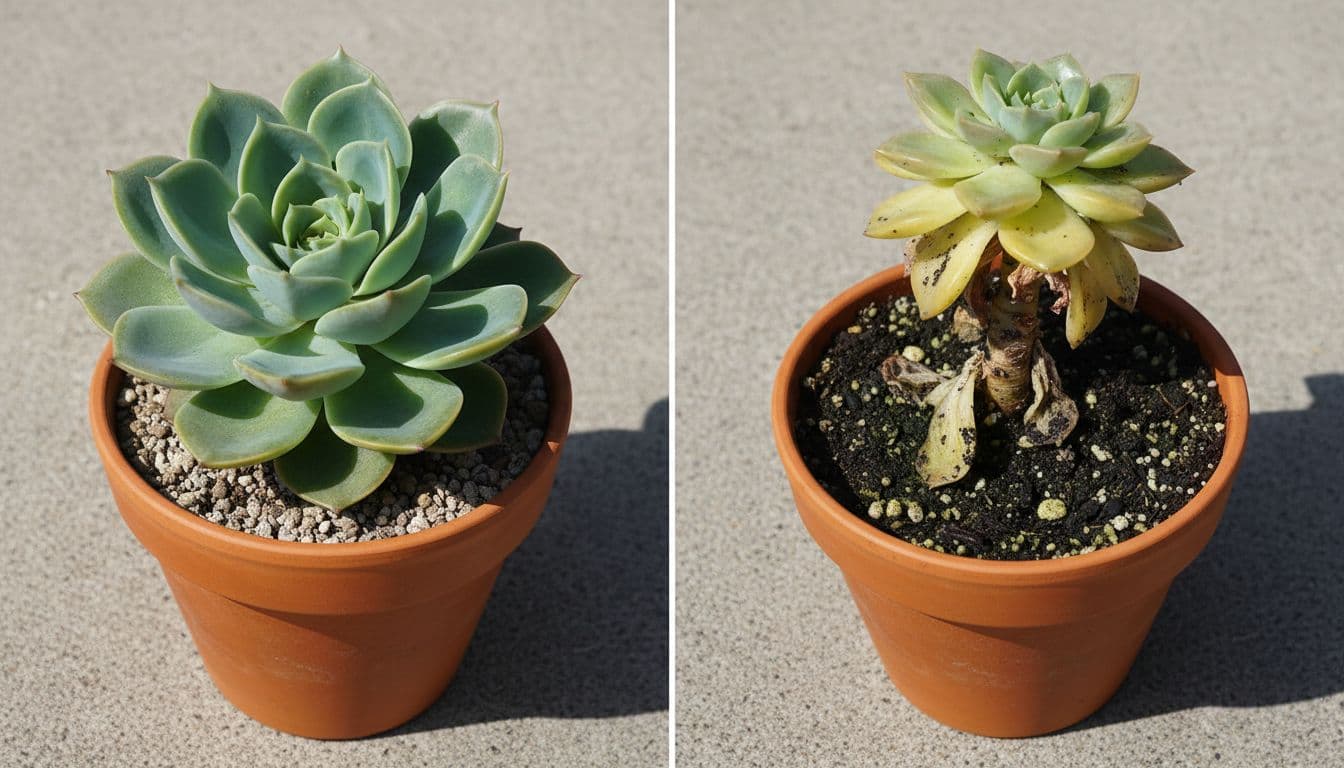
An overwatered succulent may look mushy, yellow, blistered, or spotted. Leaves may drop with barely any touch. In worse cases, the stem or roots turn black and start to rot.
Stop watering right away. Then move the plant into better light and let the soil dry fully. If the roots smell bad or the stem is soft, repot into dry, fast-draining mix and trim away rotten parts if needed. Catch it early, and some plants recover.
What underwatering, bugs, and cold stress can look like
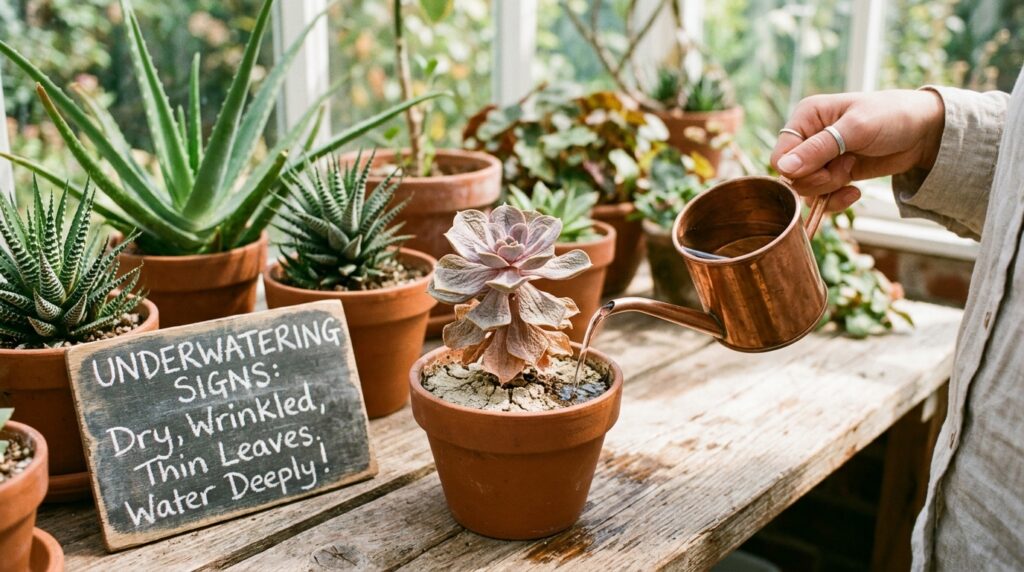
Underwatering usually looks dry, not mushy. Top growth may wrinkle or shrivel, and the leaves can feel thin instead of full. That’s your sign to water deeply, then return to a dry cycle.
Tiny cotton-like spots often point to mealybugs. If you see them tucked where leaves meet the stem, isolate the plant and treat the problem quickly. Also, keep succulents away from freezing windows, cold drafts, radiators, and heaters. They don’t like sudden swings.
Keep it simple, and your succulent will usually do fine
Most beginner succulent problems come down to four things: bright light, fast-draining soil, a pot with drainage, and less frequent watering. Watch the plant, not just the calendar, because your home changes through the year.
If you’ve killed succulents before, that doesn’t mean you’re bad with plants. It usually means the setup or watering was off. A few small changes can turn a struggling succulent into one of the easiest plants in your home.
If your succulents keep dying, it’s not random.
It’s usually the setup.
Fix that first, and everything else gets easier.
Succulent Care Questions (Quick Answers)
How often should I water my succulents?
Water only when the soil is completely dry. For most indoor setups, this means every 1 to 2 weeks in warmer months and less often in winter.
Why are my succulent leaves turning mushy?
Mushy leaves usually mean overwatering. Let the soil dry out completely and make sure your pot has proper drainage.
Do succulents need direct sunlight?
Most succulents prefer bright light and some direct sun, but too much intense sun too quickly can cause damage. Gradual exposure works best.
What type of soil is best for succulents?
Use fast-draining soil like a cactus or succulent mix. It helps prevent excess moisture and root rot.
Can succulents survive indoors?
Yes, as long as they get enough light. A bright window or a grow light setup works well for indoor succulents.
Why is my succulent stretching or leaning?
This is called etiolation and happens when the plant isn’t getting enough light. Move it to a brighter spot.
Should I mist my succulents?
No. Misting doesn’t provide enough water to the roots and can lead to surface moisture problems. Deep watering is better.
What kind of pot is best for succulents?
Use pots with drainage holes. Terra cotta is a great choice because it helps soil dry faster.
How do I know if my succulent is underwatered?
Leaves may look wrinkled, thin, or dry. When that happens, water deeply and return to a soak-and-dry cycle.
Can succulents recover from overwatering?
Sometimes. Stop watering immediately, let the soil dry out, and remove any rotten roots if needed. Early action helps.