
Do Succulents Need Sun? Yes, but the real question is how much (and where)
If you’ve ever looked at your succulent and thought, Why does it look weird? you’re not alone.
Here’s the quick answer: most succulents need bright light and enough sun to stay compact and healthy.
But most guides stop there. They say “sun” like it’s one simple thing. It isn’t. In real homes, “sun” changes by window direction, time of day, and even the heat from the glass.
So instead of guessing, let’s troubleshoot.
What “sun” really means for succulents
Light helps succulents make food. More usable light usually means growth that looks sturdier and leaves that stay tighter.
Too little light shows up in very recognizable ways. The most common is stretching. The plant gets taller, but it doesn’t get fuller. Leaves often spread out and look a bit spaced or stretched away from the center.
Too much intense light can also cause problems, especially when the plant is moved suddenly. You may notice dry brown patches or pale, bleached spots. In some cases, leaves look “crispy” in the areas getting the harshest light.
The key thing to remember is this: succulents don’t just need “sun.” They need the right combination of brightness, timing, and gradual change.
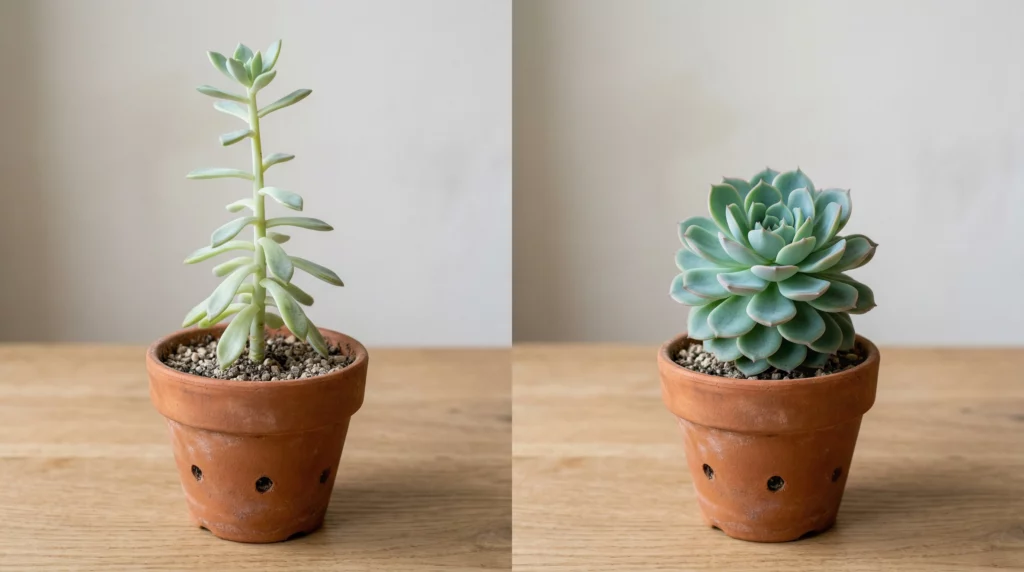
Quick symptom check: more light or less?
If your succulent is stretching, it’s usually begging for more light. That “reach” toward the window is the plant trying to find what it needs. This can happen even if you watered correctly. People often assume the watering is the issue, but stretching is almost always a light story.
If your succulent has white or brown marks, it’s often a sign your plant got too intense light too quickly. This can happen when you move it from a darker room into a bright window, or when it sits too close to hot glass on a sunny day.
A practical way to tell: stretching is a slow, gradual look. Sun damage usually looks more abrupt, especially after a change in placement.
How much sun do succulents need?
Instead of chasing an exact number of hours (because no two homes are identical), focus on the outcome: healthy, compact growth.
Many succulents do well with several hours of bright light, and some handle direct morning sun better than direct afternoon sun. Some can even handle stronger outdoor sun, depending on your climate. Others need gentler exposure to avoid burn.
So here’s your best “at-home” rule:
- If it’s stretching, add light.
- If it’s burning, back off intensity.
- If it looks stable, don’t keep changing things every few days.
Indoor placement: window direction that actually helps
Where you place the plant matters as much as the amount of light.
East-facing windows often work well because they give gentler morning light. This makes them a great option if you’re trying to correct stretching without shocking the plant.
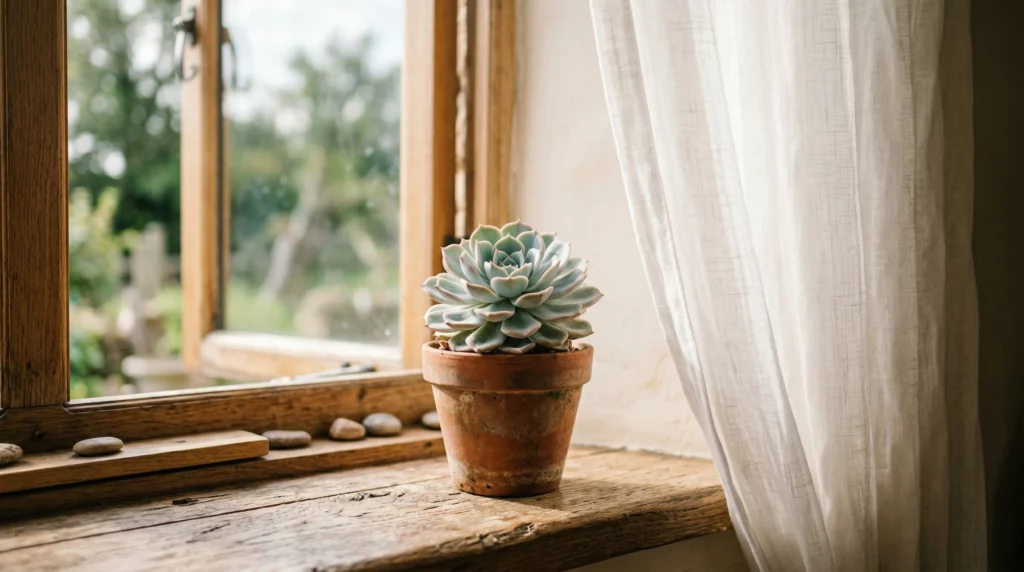
South-facing windows can be excellent for growth, but they can also get intense. Afternoon sun through glass can turn hot quickly, and that’s where you might see leaf stress if the plant sits too close.
West-facing windows tend to be the strongest and hottest. They’re not impossible for succulents, but you’ll need to watch for burn, especially during hotter months.
North-facing windows are usually the hardest. Many succulents will survive there, but they often stretch over time because the light just isn’t bright enough.
The hot glass problem (why burns happen indoors)
A succulent can handle sunlight. The issue is sometimes the glass. On hot days, the window can heat up and concentrate warmth at the leaf surface. That’s when you can see sudden white or brown patches even if the plant wasn’t moved into “full sun” outdoors.
If you suspect hot glass, try moving the plant a few inches back from the window. You can also rotate the pot so the plant isn’t getting the most intense angle in the same spot all day.
Can succulents live in low light?
They can survive, but most will not stay looking their best.
In low light, you’ll usually see slower growth, softer looking rosettes, and stretching that slowly changes the plant’s shape. If your home is dim, you have two choices: improve light or accept that your succulent may not look “full and tight” year-round.
How to increase sun without burning your succulent
This is where a lot of people mess up. They move the plant into brighter light all at once, then act surprised when it gets damaged.
When you change light levels, do it gradually.
A simple approach is to start with gentle direct light, usually morning if you can. Then keep it there for several days. After that, increase gradually over the following days and weeks. If you see any whitening or crispy patches, stop increasing and move the plant back toward gentler light.
This slow adjustment is what protects your plant while it adapts.
Outdoors: do succulents need full sun?
Outdoor light can be wonderful for succulents, but “full sun” depends on your weather. In cooler or mild climates, many succulents handle it fine. In hot summers, they may need afternoon shade.
If your plant looked great indoors and then suffered stress after a day or two outside, it likely needs a slower acclimation. Outdoor sun is stronger, and wind plus heat can make plants react faster than you expect.
When you know you got it right
You’ll notice comfort in the way the plant grows. Leaves look firm instead of floppy. Growth stays more compact. Stretching slows down or stops.
And you’ll stop feeling like you need to “fix” the plant constantly. Once the light is right, the changes get calmer.
Want to dig deeper? See My How To Guide.
Quick recap
- Most succulents need bright light and enough sun to thrive.
- Stretching usually means not enough light.
- White or brown marks often mean too much intense light or sudden sun.
- Choose window placement based on exposure, and watch out for hot glass.
- Increase light slowly so your plant can adapt.